Tinubu Charges Nigerian Varsities To Drive National Development
President Bola Ahmed Tinubu has described the nation’s universities as critical partners in the nation’s developmental agenda.
He has, however, charged them to produce graduates capable of responding to the realities of a rapidly changing global economy.
Tinubu said the country could not achieve sustainable economic transformation without corresponding investment in human capital.
“Universities are more than institutions where degrees are awarded. They are centres of knowledge creation, innovation, critical thinking, entrepreneurship, cultural development and national transformation,” he said.
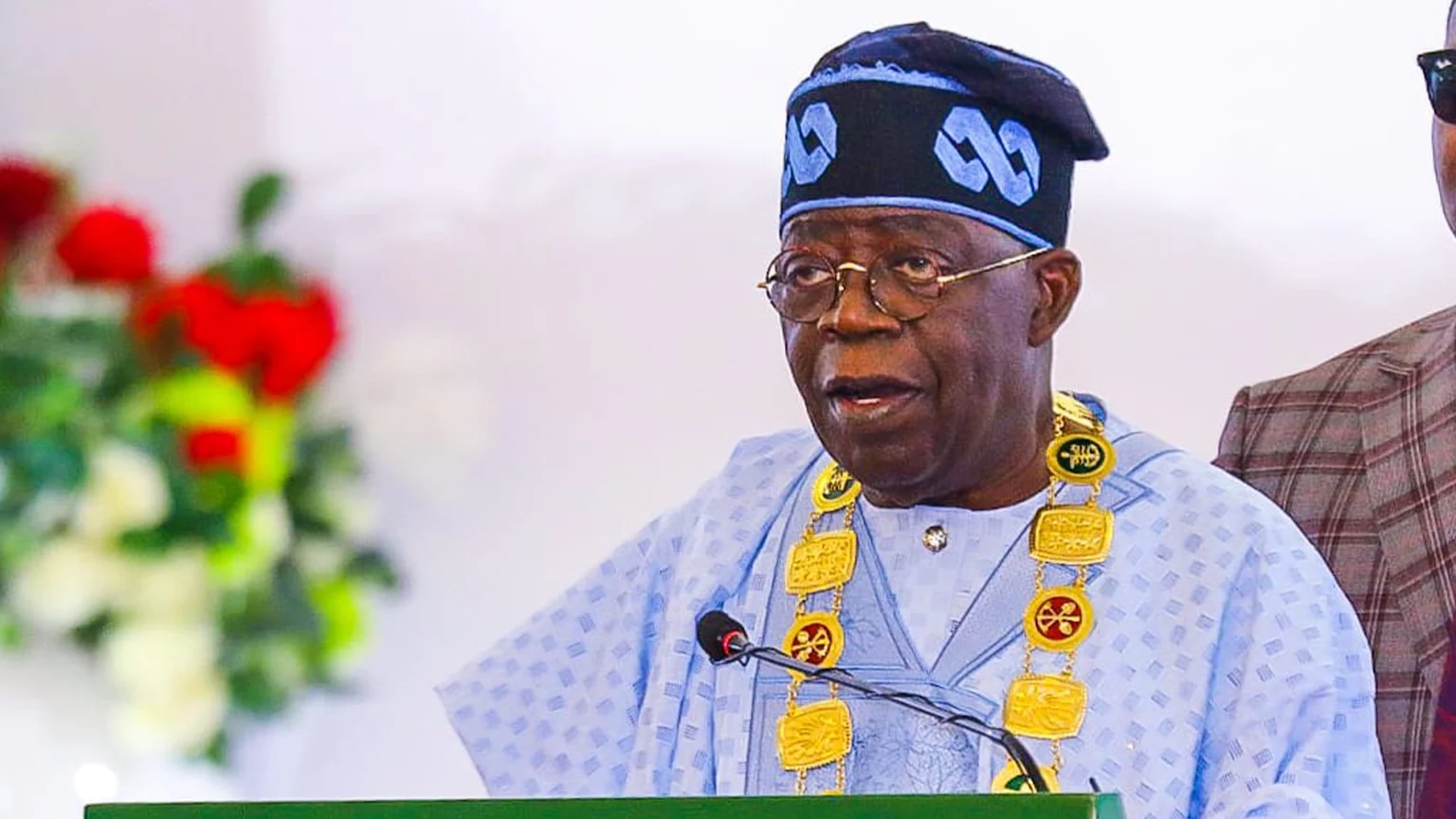
Represented by the Minister of State for Education, Prof Suwaibat Saidu Ahmad, Tinubu gave the charge on Tuesday in Ilorin, Kwara State, while declaring open the 37th Annual Conference and General Assembly of the Committee of Vice-Chancellors of Nigerian Universities (CVCNU), at the University of Ilorin (UNILORIN) main auditorium.
According to him, Nigerian varsities must produce graduates who are not only academically certified but innovative, ethical, digitally competent, entrepreneurial, adaptable and capable of solving real-world problems.
“The question before us is no longer simply whether our universities are producing graduates. The more foundational question is: ‘what kind of graduates are we producing; how effectively are our universities preparing them to contribute to Nigeria’s economic and social transformation?’” he asked.
Tinubu said his administration was pursuing reforms aimed at improving the quality, relevance, accessibility, affordability and accountability of tertiary education.
He disclosed the Federal Ministry of Education’s plan to implement the Education Sector Renewal Initiative, with particular focus on institutional governance, quality assurance, research and innovation, digital transformation, skills development and stronger university-industry linkages.
The President also called for stronger practical training, noting that academic knowledge must be complemented by hands-on experience.
He disclosed that the government had began to review curricula, particularly in agriculture, to shift emphasis from theory to practical training.
“We are moving away from 70 per cent theory and 30 per cent practical to a robust 80 per cent practical and 20 per cent theory,” he said.
He added that accreditation requirements would now compel universities, faculties and departments of agriculture to establish partnerships with relevant industries, while students would be expected to undertake industrial attachments throughout their academic programmes.
According to him, the same approach would gradually be extended to other disciplines through the review of the Core Curriculum and Minimum Academic Standards (CCMAS).


About Post Author
